 |
| Source: https://www.indybay.org/uploads/2011/06/19/j_4907.jpg |
After having reviewed research from sources ranging from CNN articles to Stanford studies to drug war analysts, I believe I have a pretty good understanding of how it’s going. While the answer isn’t a black and white yes or no answer, it’s safe to lean to one side more than another. At the same time however, the answer is very clear depending on where you look. For instance, looking at Colombia in the 1980s versus Colombia today, we can see a significant difference. No longer is Colombia ruled by drug kingpin Pablo Escobar but instead by a legitimate government. No longer is Colombia a narco-state but rather a real one with other economies. However, this isn’t to say cocaine is no longer produced there. Just as with any country, you cannot completely eradicate a drug. But the production levels of cocaine are much lower than before according to research conducted by the United Nations. Thanks to the joint efforts of Colombian forces and US forces, Colombia is no longer dominated by cocaine. So in regards to Colombian production of cocaine, I would argue that it is safe to say, that is a victory in the war on drugs.
Of course however, the Colombia victory is only a small battle in the much larger war on drugs. Other places have not been so lucky. Let’s take Mexico for example. The drug violence there is high and the Mexican government is essentially fighting a war on their own soil with the feared drug cartels. The violence caused by the drug trade has made many parts of Mexico dangerous to visit. The violence has also screwed with local’s lives there. People are scared to work, or go to certain areas, and even afraid of going out after dark. This has caused problems with the local economies as many people are left poor and stereotyped by outsiders. Right now, it appears as if the drug war in Mexico isn’t really doing much other than proving Mexico won’t tolerate the cartels.
Drug prices too have shown weakness in the war effort. Marijuana use by teenagers has increased in the past ten years proving not only that it’s easily available, but that it also is still popular. Hard drug usage (ie. cocaine) has gone down but only by about a percent which shows that some people still like it and that it’s not completely gone like President Nixon would have liked. Prescription drug usage is also up a great number mainly due to the fact it was barely even a thing 20 years ago. What this evidence shows is that many people (if not more) are using drugs and that the war on drugs has failed to curb the usage.
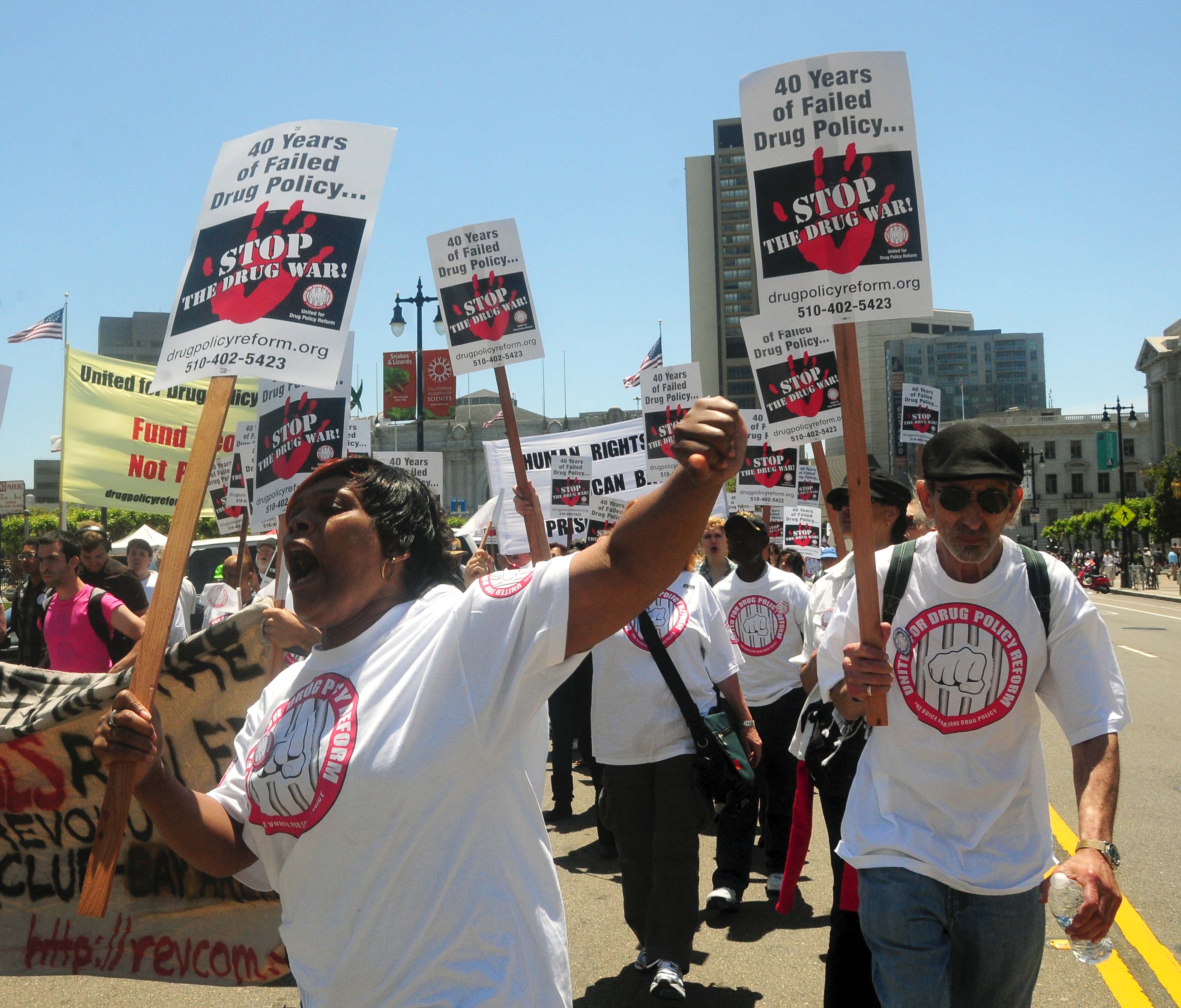
Overall, since the inception of the war on drugs by President Nixon in 1971, the US has seen its ups and downs in it. From the zero-tolerance hard policing tactics of the 1980s, to the new reformed tactics being put in place by President Obama; the American culture has also seen a transformation. More people than ever before are supporting the legalization of Marijuana and are calling for the government to try a new approach in the drug, if not all out end it. I believe that with the way things are going, Marijuana will be legalized on the federal level (if not by all/majority of the states) within the next decade or two. So despite one's beliefs, our culture has changed and only time will tell what will happen.

This was a great approach to the topic. You addressed a wide range of factors in the war on drugs, which I think is an issue that deserves more attention. I would have never though that drug use would have grown as much as it did despite the efforts of various drug use combating groups. This blog was very informative and well done.
ReplyDelete