Monday, December 14, 2015

To Vegan or Not To Vegan?

What do you think of the vegan lifestyle?  Do you think it seems easy or hard?  Tasty or gross?

Becoming a vegan/vegetarian is not that bad and difficult.  Many people perceive the vegan lifestyle as all fruits and veggies, and no pizza, ice cream or mac and cheese… but they are wrong.  There are many different alternatives to these products that are just as tasty and are a healthier option.  Brands such as; So Delicious, Kite Hill, and Amy’s, are all amazing food brands/companies that carry vegan and vegetarian products.  But taste should not be the only factor when deciding whether to go vegan/vegetarian or not.  Other things to consider are the health benefits to yourself and the environment, and the amount of money you could be saving each year.  

Becoming vegan can be a process.  Some people are able to switch right away, while others need to take their time.  When deciding whether or not to go vegan because of the health reason should definitely give your mind some perspective.  Some benefits to becoming vegan are reducing the risk of food-borne illnesses, having more energy, losing weight, saving more money on food, and saving the animals from being slaughtered.  The most important reason I went vegan for, were to improve my overall health and to save animals from being abused and killed.  Improving my health was totally worth giving up and animal and animal by products.  Not just at the beginning of my journey, but during the process, I tend to take my time to understand why this is very important to me.  When reading an article that mentioned "food-borne illnesses of all kinds account for 76 million illnesses a year, resulting in 325,000 hospitalizations and 5,000 deaths in the United States", I was somewhat scared.  The fact that there are billions of people in this world and over 76 million are becoming sick from animal products, makes this experience so much worth it to know that I will not be any of those 76+ million people.  

My second reason for going vegan, which is typically the main reason many people become vegan, are because they want to save as many animals as possible.  This is what first sparked the fire in me to take the first step and cut out all of my meat intake.  Two Summers ago, Summer of 2014, I went to a festival known as Warped Tour, which is always sponsored by Vans.  While roaming around the with my friends, we came across a bus booth that was giving away $1 to anybody that would watch a 3 minute video that displayed animal slaughtering, abuse, and much bloodshed.  When the video was over and I was handed my $1 bill I refused to take it.  Nobody should be able to witness the gruesome effects people have on animals because it should not happen in the first place.  Having this spark the fuel for me was very eye opening.  I can’t imagine what the animals must be going through during those videos, and still, probably even at this moment somewhere an animal is taking a beating so that we can have unnecessary food on our plate that can possibly kill us or cause us to become sick.  

At the time of beginning this lifestyle, I did not really consider money as a large aspect of this, but throughout the journey, I realized that I did end up saving quite a lot of money especially in the summer time because I would always buy all of my fruits, veggies, and other foods I thoroughly enjoyed in bulks, which also gave me extra discounts in the end.  Overall, this journey is an experience that I will keep with me for my whole life.  Becoming a vegan or vegetarian is one decision away.  make the right choice.  

For my next blog post, I will be discussing why the government needs to put forth more effort into protecting the environment and all the animals and nature at exist in it.

Wednesday, December 9, 2015

Bankroll Management


If you’re serious about poker then you need to be equally serious about your bankroll. Although hands are ultimately won at the casino, the financial backing off the table couldn’t be a more important aspect of the game. But what exactly is a bankroll? Basically, it is the money that a person has set aside specifically for playing poker. The reason to have a bankroll is so a player can weather losing streaks and not completely deplete their funds.

Some poker players have a dedicated bankroll based off of precise calculations, and other players like me just hide poker money from their parents. Similar it to how a person might put aside money for any hobby or vacation fund, the overall goal is to put aside enough money in reserve for future play.
Recreational poker players who take the game seriously tend to keep a dedicated bankroll. These players might take out 20%of what they win. What they don’t do is take any money out of this precious poker fund to pay for new clothes, movie tickets, or going out on the weekends. This is the discipline that players must have so they don’t end up dipping into their expenses later on. In contrast, professional poker players have to take money out of their bankroll for housing, taxes, retirement, healthcare, vacations, and all their living expenses. So developing a strong discipline is even more important later on when you have to manage more expenses.
A bankroll is the one aspect of this crazy game of poker that we can control. Which is why bankroll management is one of the most important poker skills one can master. While it does take discipline, it is a skill that must be learned if you are going to be successful at poker. Don’t risk too much money at one time by moving up too fast in levels. Let your poker bankroll dictate what limit you’ll be playing.


What is your work worth?

    As someone who is looking at going into the design industry, I’ve always been interested in the idea of doing freelance work.  But I and many beginning freelancers face the same question: What should I charge for my work?  There is no one answer.  Rather, the answer to this question is different for each freelancer.  But, the answer usually follows similar principles and factors.

SOURCE: http://millo.co

     Before you even start thinking of coming up with a number to charge, you first have to look at what your costs are.  Using an article of the Design Shack titled, “Freelancing 101: What Does It Cost to Be a Freelancer?”, I was able to get a good idea of the equipment a freelance needs as well as an idea of what this equipment would cost.  What I found was that a freelance design typically needs: A computer, software, high speed internet, web hosting, resource accounts, printer/scanner/copier, and general office supplies.  I tried to then get a rough estimate of what all this equipment would cost, but it is very difficult.  This is simply because each designer is going to get a different computer, different software, etc, as well as there being countless numbers of web hosting services, internet providers, and resource sights.  

     The next factor you have to consider is taxes.  As a freelancer who is working for themselves, they have to pay an extra tax.  This tax is called the Self Employment tax.  I found information on this tax on the IRS’ site on a page titled “Self-Employment Tax”.  The Self Employment tax, in reality, really applies to everyone.  However, when you work for a company or firm, you only pay for half of the tax while your employer pays for the other half.  When you work for yourself, you have to pay the whole tax.  The tax is 15.3% but is split up with 12.4% going to Social Security and 2.9% going to Medicare.  The tax also applies to different amounts of income, which I explained in an earlier blog post.

     Once you consider your equipment costs and taxes, the next question you must answer is, should I charge a project fee or an hourly rate?  Using an article on Freelancers Union titled “Hourly Rate or Project Fee: What Makes Freelancers More Money?”, I tried to come up with an answer.  What I found was that there is no clear winner between charging hourly or per project.  There are pros and cons to both, but ultimately what I found was that there are certain situations where one option is better than the other.  Typically, an hourly cost is beneficial when a project is ongoing and is long term as well as when project goals are unclear.  On the other hand, a per project rate seems to be more beneficial when you have multiple clients who you are charging differently, your client doesn’t know what you do, you want to maximize productivity, your client is on a strict budget, or when you work fast.  I explained all of these different scenarios in greater depth in one of my earlier posts titled, “Hourly or Project?”.

     At this point in the process, a freelancer would probably have some rough idea of what they are going to charge.  As result, I looked at ways that you can maximize your price.  I used an article on Freelancers Union titled “Everything You Need to Know About Freelance Rates, Pricing, and Fees” that provided a good list of practices.  What I found was that one way to maximize your fee was to not use zeroes.  Doing this makes it seem like you have tailored the fee to your client’s needs.  I also learned that knowing how to negotiate well is important.  This includes being able to understand your client’s goal and representing yourself as a business rather than an individual.  Another piece of information I found was a list of good provisions to include in your contract.  These included provisions such as who has ownership of the work, what the scope of the project is, how payments will be made, information on early project terminations, as well as a couple other important provisions.


     Through my research, I have found that there really is no definite answer to the question of what determines what a freelancer gets paid.  While there are similarities, such as equipment costs, taxes, etc., it almost always comes down to circumstances.  Overall, I found that before setting a fee, you need to look at expenses and then think about your work ethic as well as your profit goal.  Once you know these, you can start really thinking about what to set your fee at.

Knowing When to Fold'em


Winning with great cards is one thing, but knowing when to fold is the real key to consistent success in poker. Knowing when to lay down your cards isn’t about folding a terrible hand because anyone can do that. It's about finding yourself great cards but folding them when your opponent smirks at the last card. It's all about the read. A good player must develop a sub-conscience awareness that helps them pick up on the smallest of tells. Was there a facial tick? Or was there a slight delay when betting. Some people pick up on these tells naturally with complete accuracy. For most of players, it's a skill one has to perfect over years.  

There are also some basic moves that count as warning signs in the game. When you come up against these, your opponent generally has something big, or could well have by the next card. "These signs can include check raises, smooth calling, and medium bets", according to professional player Phil Ivy. Of course, you can also make your decisions easier with some poker science. This is the economic aspect of the game. 
One very important strategy involves understanding the value to your opponent. What’s their raising range? How much are they betting on a good hand versus a great hand? Similar to how an economist study the value of certain markets, understanding the price of your bet, and the value of the pot will help you make decisions to determine the strength of your opponents cards. Another thing to keep in mind is to fold when you realize the costs outweigh the benefits. This usually occurs when you know you cannot come back from a bad beat.

Making a fold is a hard thing to do because no one likes to think they're folding the winning hand. But by recognizing key tells, and understanding the value of certain bets, folding may be in fact the most economical thing to. 

How do food businesses become successful?

During the first two quarters of economics class, I have come to many conclusions about what how to run a food business profitability. First, I decided to look at a successful restaurant, Panera, and discovered that they developed their company to fill a niche market-healthy, higher end, fast, casual food. They created an ambience so people would want to stay there, meet there and work there. I researched information on Forbes Magazine website.
https://upload.wikimedia.org

In my second blog post, I argued that restaurants need to sell popular items in order to achieve a successful business. Examples of the most popular meals in the United States include sandwiches, burgers, bagels, pastries, eggs and salads. I discovered that American are more choosy about what they eat for breakfast or lunch, but for dinner, many Americans are willing to eat more diverse foods. Most importantly, they want food items that taste good. People nowadays are also willing to pay more for food products without GMO's.

In my third blog post, I went over what a restaurant need to do in order to open and then, sustain business. Currently, it is extremely difficult to build and sustain a restaurant business. Deluxe restaurants have declined 10-15%. A shocking 26% of independent restaurants fail in the first year. I then dive into the most important seven tactics I believe to incorporate in your restaurant business to achieve success and avoid going out of business.
http://www.nandos.com

In my fourth blog post I go over what one needs to do in order to expand his or her food business. Expansion should only be implicated when the food business is stable in its foundation. It talks about opening up a new restaurant in another location, and all of the details that need to be considered and under control in order to make sure opening up another location is a good idea. It also brings about the idea od diversifying your business and doing so in order to successfully expand.

Tuesday, December 8, 2015

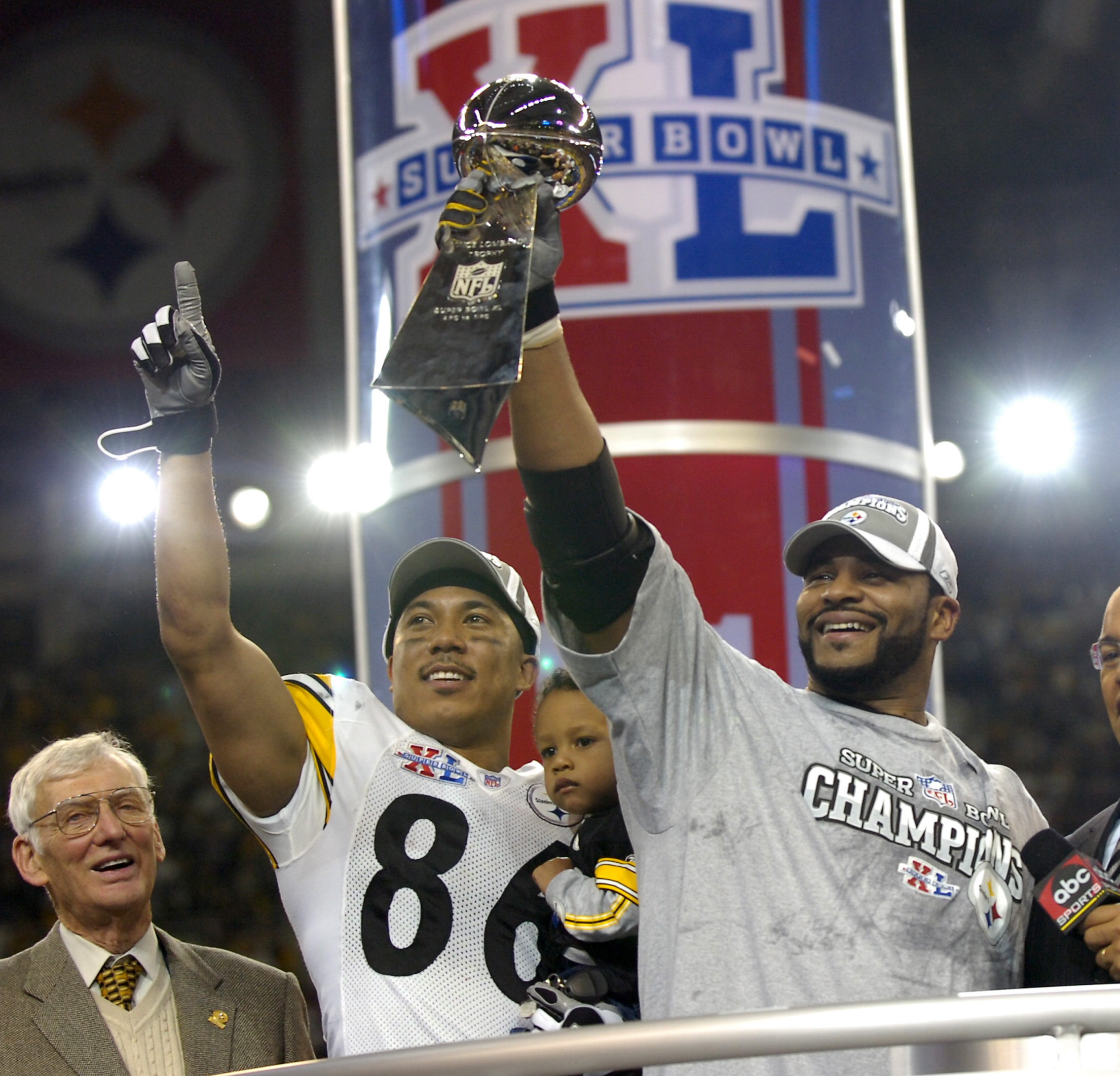
Conclusion Post: How the NFL has been so profitable

The National Football League has been an American icon for generations and continues to gain popularity season after season. Their shield logo is recognizable to just about anyone and you couldn't walk through a grocery store early on a Sunday morning without sighting someone sporting their team's jersey with a full bucket of chicken wings in their shopping cart. This game has become more than a game, but also a way of life. A game that thousands can rally behind and also clash over bitter rivalries. It brings friends together every week over its five month season and causes heartbreak over the seven month offseason. This game should be pure, because of everyone’s sheer adoration for the sport yet the league finds a way to bring in an absurd profit and continue to charge a fortune for fanatics like me to see their team play.
The NFL has become a true monopoly of the sports world and continues to bring in more and more money. The mystery of how they do it has become increasingly clear as highlighted in the past blog posts I produced. One large element to their success is their television sponsorships and contracts. These networks have paid top dollar in order to get their rating up thanks to the sport and only helps get the league more exposure and recognition across the nation and even global air time.Of course, along with people tuning in 3 days out of the week, they also will go to see them play in person. With rising prices in this field of the game as well, it only makes sense that their profits come from here too. With the fame comes apparel sales both at the games, in stores, and online. With all this coming from a licensed retailer, This leads to an even higher source of income.
In conclusion, the league is also gaining profits from a rather unfair advantage. By declaring themselves as a non for profit organization, they end up saving millions in what would be paid off in taxes. They also find ways to trick the government by escaping bankruptcy. Overall, the NFL has proven to be increasingly profitable through reasons spanning from ticket sales to licensed jerseys and hats and continue to expand their target markets as the league moves forward into their 50th season.


Should Athletes Get Paid as Much as They Do?


I created this project full of blog posts determined to discover why professional athletes get paid as much as they do, and whether or not it is fair. Throughout the process of making all of the posts, I have been extremely understanding of just how difficult it is to become a professional athlete. For that reason, it is reasonable for them to make a good portion of money. That being said, the amount in which they do get paid seems to almost be excessive. After doing several different types of research, the question “Should athletes get paid as much as they do?” led me to multiple different conclusions.

Source: http://cdn.fansided.com/wp-content/blogs.dir/33/files/2011/01/albert-pujols-money-contract.jpg
Image result for athletes getting paid too much
Source: http://cf.mp-cdn.net/be/d1/cb58796aabd3f20a2c5f73fc0e14-are-proffesional-athletes-paid-to-much-nba-nfl.jpg
The first step I took to answer the overall question was comparing the differences in salaries between sports. I compared how much the average NFL player makes compared to the average MLB player. I learned that managers aim to pay their athletes as much as possible so that they perform to the level of their expectations. The difference in sports plays a role in this controversy because the amount of athletes a sports roster can carry plays a critical position for how much each player gets paid. For example, a starting lineup in baseball requires 9 positions, whereas football requires 22 starters for offense and defense. Therefore, there will be more bench players in football to cover each position than there will be for baseball. As a result, the NFL has a lot more players that their managers need to pay compared to the MLB. This leads me to conclude that the size of a certain roster that a sports team requires can affect the salaries of the players.

Health for the athletes and fans is definitely the largest concern when it comes to sports events. Due to this, I wanted to see whether or not athletes choose to spend their money appropriately. Obviously, just because athletes get paid a lot of money right now doesn’t mean they were born in a stable family. I took this problem into consideration and specified on a specific athlete by the name of Michael Oher. Michael Oher was born into a abandoned  family, so he grew up on his own and found himself homeless. Eventually when Oher was 16, he was taken in by a family that later became his legal guardians. Oher was granted the opportunity to be involved in the community  with this new family, and did so by playing football. He excelled in football and amazingly became a high paid NFL player.  As a result of Oher’s improper and rather rough childhood, it led me to wonder whether or not he would be successful with wealth one day, or if he would choose to spend his money on bad things such as drugs and weapons. Fortunately, as of now Michael Oher has proved that going from rags to riches doesn’t automatically mean that the person will choose to spend their money in an inappropriate manner.

After researching just how much the average professional athlete makes, I began to compare it to the average americans salary. I was astonished to discover the differences in wealth and why. I noticed that athletes don’t only get paid because of their salaries, but they get paid even more from advertisements. After totalling the athlete's salary and advertisement money together, I began to wonder whether the money that athletes make was necessary. As an example, I combined the total salary and endorsement money of Tiger Woods and Lebron James to let viewers understand how much money these athletes make. Tiger Woods has a salary of $16.1 million a year and gets paid $65 million from endorsements. That is a total of $78.1 million. Lebron James has a salary of $17.8 million and gets paid $42 million from endorsements. That gives James a total $59.8 million. These statistics are shocking because it reveals how much athletes get paid from advertisements alone. This is only 2 of hundreds of more athletes that get paid a ridiculous amount of money. Is it really necessary for these athletes to get paid that much more than the average american?

In my last blog post, I compared the average american’s work hours against a professional athlete's average work hours. If a professional athlete got paid more due to working more hours than the average american, then it would only be fair to get a boost in money. After researching, I learned that the average american works about 47 hours a week, while a professional athlete trains on average for about 42 hours. In one article it explained that the hours from athletes were fairly lower because of the need to rest due to the “brutal” workouts. In my opinion, athletes get the better end of the deal because they are getting paid more, working less hours, and getting in shape while doing it all.
Whether or not athletes should get paid as much as they do is a common question asked in today’s society. Although more money may mean better performances, and even if rags to riches doesn’t lead to a negative future, after putting all of the facts and statistics together, I have concluded that I don’t believe that they should get paid as much as they do. The fact that athletes get paid as much as they do from endorsements/salaries and work less hours while getting in shape, led to me to believe that the amount in which they get paid is unnecessary.
   

Should these athletes be paid millions of dollars just to simply play baseball?

I started out this project looking for an answer that many other people wondered about and wanted a better explanation of why baseball players make so much money. I did a lot of research and I feel that I came up with some solid information about this topic and justified the answer.
  • I first asked myself the simple question of why these players are able to make the money they do. The answer to that is baseball is the only sport with no salary cap, which means that as long as they have the money, they can go out an get whoever they want. The money comes from teams success over the years and winning championships brings in a lot of cash. Also the MLB has a very strong union. Marvin Miller was the man that paved the road for the game of millions back in the 30's and the league hasn't looked back since.

  • Secondly, I thought to myself is it even fair that these players are making the serious money they make? The reason why they make more than say a teacher or a paramedic is because these players have agents constantly working for them to make sure that they are satisfied. They are the ones that are negotiating with the teams to compromise a good deal for their player.

  • Thirdly, I decided to look at other sports like basketball and football to see how much money they are making compared to baseball players and its very shocking. While MLB players are receiving jaw dropping contracts, the NBA and NFL are lacking one major thing and that is not having a salary cap. It is impossible for those players to even compare to baseball players with that limitation the leagues have on them.

  • Finally, I looked into which positions players make the most money and does where they play make a difference in how big their contract is. I learned that in recent history that pitchers get the better end of the deal usually when it comes to how big their contracts are. Some of the most recent contracts have been as big as 31-34 million a year for a long span of time. This is because the MLB values pitching more and thinks that it is the biggest aspect to a winning team. With all of this said, people just need to realize that the MLB is set up differently than other sports so this allows many loop holes to earn more money, and the craziest part is that players in the MLB are going to see contracts get higher and higher as the years go on. 


What determines the value of an NFL team


I started off this project set out to seek what determines the value of an NFL team and to see why they are so much more valuable than other pro sports. Throughout my past blog posts I researched into different factors that contribute to an NFL team value.
1wdojq181if3tdg01yomaof86.wpengine.netdna-cdn.com

  • I first researched into why NFL teams are some of the most profitable sports teams in all of sports. I compared the values of NFL teams to MLB teams. One really interesting statistic I found in that was that all of the NFL teams values added would be $45.7 Billion dollars which is more than all of the teams in the MLB and the NBA combined which is insane to think about.
  • Secondly, I researched into how much NFL teams make off their stadiums each year to see how much that contributes to their values. I found that one team, the Dallas Cowboys (The most profitable NFL team) earned $100 million in one year just off of signage and advertising in their stadium. Also that the New York Giants usually make around $75 billion a year from luxury suite seating alone. It truly was some unreal stats that I found on how much money a stadium can make its team.
  • Thirdly, I researched into what a players salary can do for their team.. I found that it is kind of an alliance that the more the team is worth the more they pay for better players, also that if you have a huge contract player that will draw in fans and raise the popularity of that given team.
  • Lastly, I research into what cities can do for there teams value and I found it to be similar like the players. That the city is a huge factor, and that the more the city does for their team results in more of what the team can do for their city and that overall boosts the value of the team as whole. So all in all I discovered all the factors that determine the value of an NFL team and how profitable of a business the NFL as a league and separate team are overall.

What an NFL teams city does to their value

In this blog post I set out to see if the city that an NFL team is based out of, affects their overall value. I found an article in USA Today titled Football's back: NFL is a key player in the economy  written by Paul Wiseman to look deeper into what the city does for its franchise.
s-media-cache-ak0.pinimg.com
This article was written shortly after the NFL Players Association and the NFL reached an agreement to end the lockout in 2011. It talks about how “they didn't just save the football season. They saved the most profitable sport in America, the most popular show on TV and billions of dollars that would have disappeared from the economy”(Wiseman). Not only does it help the team, but the “110,000 jobs in NFL cities”. So not only do the cities help their teams but the teams definitely help the city as well. They also go on to discuss that “together, the games add about $5 billion to the economies in NFL cities” and that it helps support its city very well if there is an NFL team in that city alone. So it is almost an alliance that an NFL team has with its city, they both equally help support each other by both doing there job. Also another thing that the NFL looks into if any team were to move cities is they look into see how big the cit is and if their fan base would be enough to support and NFL team. So it is definitely a factor for team and helps contribute to there value in multiple different ways.