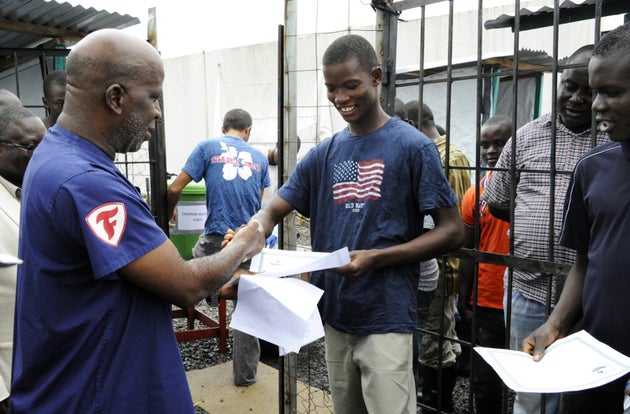
One of the most dangerous weapons in this world is not a gun, sword, nor bomb, but an epidemic that can wipe out thousands. When the ebola virus appeared in Africa, the United States prepared itself to respond to this international threat by sending medical assistance and professionals.
source: view image
As soon as the ebola virus started spreading, President Barack Obama announced a plan in address to the press. In an article found on the White House’s official website entitled, “FACT SHEET: U.S. Responds to Ebola Epidemic in West Africa”, the Office of the press secretary summarized the United State’s plan of action when stating, ”The United States has applied a whole-of-government response to the epidemic, which we launched shortly after the first cases were reported in March. As a part of this, we have dedicated additional resources across the federal government to address the crisis, committing more than $175 million to date.” In my opinion, $175 million is a lot to spend on another country, but it is also necessary to provide essential care. In addition to the United States responding, it also referred to other nations to help address the epidemic, as shown in the article when it states, “we are partnering with the United Nations”. This not only emphasizes the urgent need for help in West Africa, but also shows how international threats call for international support.
After reviewing the articles, I believe that international support is not only necessary for epidemics to be stopped, but it is also quite helpful, especially for countries in West Africa that may not have the resources to do so. I also think that the U.S. responding to the issue with the help of other countries is a good thing because it encourages global relations. This is very important when addressing an international issue.
Although the U.S. did respond to the epidemic, the plan contained some faults. One main issue was that Americans, especially average citizens, were fearful of getting the virus itself and wanted to make defense a national priority over helping West Africa. According to an article entitled, “Report Slams U.S. Ebola Response and Readiness” found on the NBC News official website, “Americans focused on their own almost nonexistent risk of catching Ebola from travelers instead of pressing to help the truly affected nations.” Not only did Americans respond in a somewhat selfish way, but their fears were also unrealistic.
I think that in order to take action against a disease like ebola, the U.S. should provide care despite the fears of catching the disease at hand. Chances are that with help, diseases are more likely to be contained, so people should encourage this if they truly do not want it to affect them. The government did its part in this case, even though these fears were present.
FUTURE RESEARCH: In my next blog post, I will research a natural disaster that caused the United States to respond and provide medical aid.

No comments:
Post a Comment